How Field Sobriety Tests Work in Virginia & When They Can Be Challenged
Most people first encounter field sobriety tests through a set of flashing blue lights and an officer asking them to step out of the vehicle. These roadside exercises are designed to test your balance, coordination, and ability to follow multi-step instructions.
While police often present them as a definitive way to prove sobriety, they are actually highly subjective and prone to human error. Understanding the mechanics of these tests is the first step in recognizing why they aren’t always the gotcha moment the prosecution wants them to be.
One thing many drivers do not realize: in Virginia, these roadside tests are voluntary. Unlike the post-arrest breath or blood test, which carries a penalty for refusal under the implied consent law, you are not legally required to perform field sobriety tests, and declining them does not carry a separate license penalty.
The Big Three: Standardized Tests
Virginia law enforcement typically relies on three specific tests developed by the National Highway Traffic Safety Administration (NHTSA). These are the only exercises backed by formal studies, yet even under perfect conditions, they are far from foolproof.
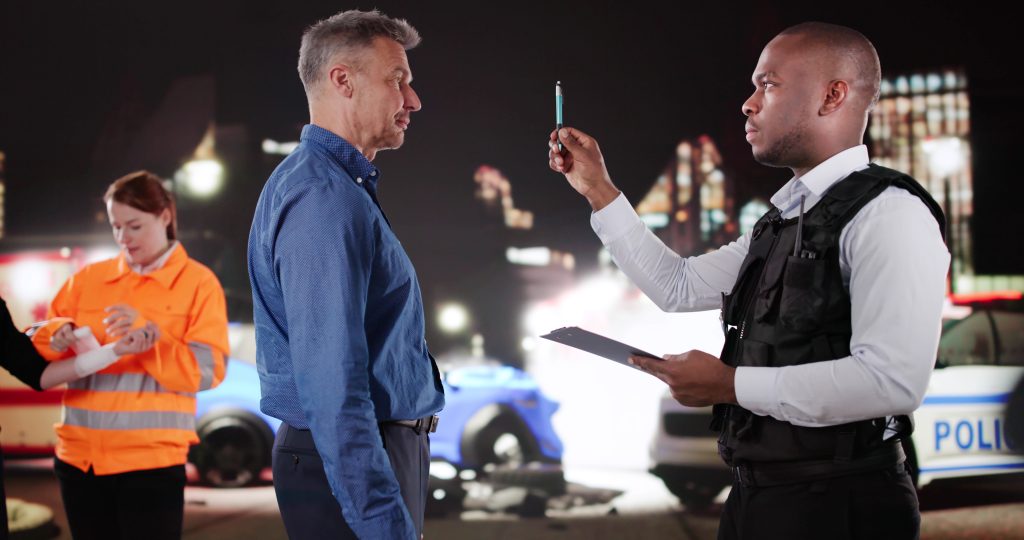
- Horizontal Gaze Nystagmus (HGN): This is the test where an officer moves a pen or small light in front of your eyes. They are looking for a specific jerking motion in the eyeball called nystagmus. While this is a physiological response, dozens of factors like caffeine, nicotine, or even inner ear issues can cause the same jerking motion.
- Walk & Turn: This exercise requires you to take nine heel-to-toe steps along a straight line, turn in a specific way, and take nine steps back. The officer is looking for eight different “clues,” such as starting too soon or using your arms for balance. It is essentially a test of divided attention that many sober people struggle with on a dark, uneven shoulder of a highway.
- One-Leg Stand: You are asked to stand on one leg while counting out loud until told to stop. Officers watch for swaying, hopping, or putting your foot down. Factors like your age, weight, or even the type of shoes you’re wearing can make this test nearly impossible to pass, regardless of whether you’ve had a drop to drink.
Why the Environment Matters
Roadside conditions are rarely ideal for a physical performance. Virginia’s varied terrain and weather play a massive role in how these tests turn out. A driver performing a balance test on a gravel slope in the wind during a storm in Chesterfield is naturally going to struggle more than someone in a climate-controlled gym.
Attorneys look closely at the scene of the arrest. We investigate whether the ground was level, if there was passing traffic causing a wind wall effect, or if the officer’s cruiser lights were flashing directly in your eyes during the HGN test. These environmental factors can be used to argue that the test results were biased by the surroundings rather than by impairment.
Medical & Physical Limitations
Your personal health history is often the most overlooked piece of the puzzle. Police officers aren’t doctors, and they frequently fail to account for pre-existing conditions that mimic signs of intoxication.
- Inner Ear & Balance Issues: Conditions like vertigo or Meniere’s disease can make it impossible to stay upright on one leg, even on your best day.
- Orthopedic Injuries: Back, hip, knee, or ankle problems can cause a person to fail a walking test by swaying or stepping off the line just to avoid pain.
- Neurological Conditions: Certain eye conditions or past head injuries can cause permanent nystagmus, making the eye-tracking test completely invalid from the start.
The Problem with Subjective Scoring
Unlike a breathalyzer that provides a digital number, field sobriety tests rely entirely on the officer’s opinion. One officer might see a slight sway and count it as a failure, while another might see it as normal. This subjectivity is a major weak point in the prosecution’s case.
Defense strategies often involve a deep dive into the officer’s training records and the body camera footage of the arrest. We look for moments where the officer gave confusing instructions or failed to demonstrate the test correctly. If the officer didn’t follow the strict NHTSA guidelines for administering the tests, the results may be considered unreliable in a Virginia courtroom.
Finding the Gaps in the Prosecution’s Narrative
Every DUI case has a story, and the field sobriety tests are just one chapter. We work to show the judge that failing a roadside test isn’t the same thing as being intoxicated. By highlighting your medical history, the poor environmental conditions, and the officer’s lack of precision, we can often cast significant doubt on the entire arrest.
Navigating a DUI charge requires a team that knows how to pick apart these standardized tests. If you’re concerned about how you performed during your stop, reach out to Weiland Button at (804) 355-8037. We’ll take a look at the footage and help you understand where the officer might have missed the mark.